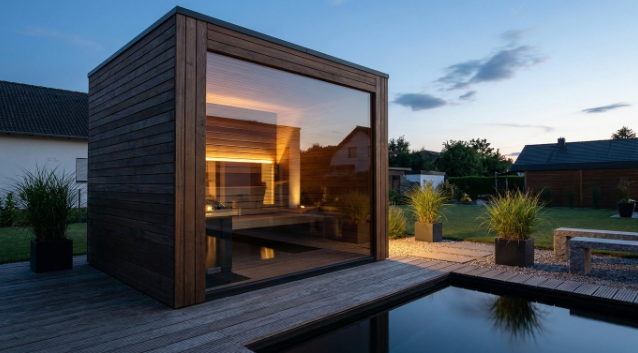
A cube sauna paired with a cold plunge gives you a compact, modern contrast-therapy setup in roughly the same footprint as a large hot tub, typically 100 to 150 square feet once you account for both units and clearance around them. The sauna side of this pairing has real cohort evidence behind it, with regular sauna use associated with lower cardiovascular and all-cause mortality risk. The cold-plunge side has a separate, more mixed evidence base, so it’s worth treating the two halves of this routine as distinct practices with different levels of research support rather than one proven package.
What Does the Research Actually Say About Sauna Bathing Alone?
A widely cited Finnish cohort study found that men who used a sauna four to seven times a week had lower rates of fatal cardiovascular events and all-cause mortality than men who used one once a week, and a related analysis found that combining frequent sauna use with higher cardiorespiratory fitness was associated with even lower risk than either factor alone. Short-term studies have also found measurable changes in blood-based markers of cardiovascular function after a Finnish sauna session in regular users. These are association studies, not controlled trials proving sauna use directly prevents heart disease, and the strongest data comes from populations with a long cultural history of frequent sauna use, so it’s worth being honest that the exact effect size in a new daily user is less certain.
What Does the Research Say About Cold-Water Immersion Specifically?
Cold-water immersion research is a separate body of evidence from sauna research, and it’s more mixed. A recent systematic review and meta-analysis found effects on wellbeing and recovery outcomes vary depending on protocol, duration, and what outcome is being measured. Other trials looking at cold water immersion for muscle soreness after exercise found modest benefit for soreness specifically, while separate research has raised the possibility that cold exposure immediately after resistance training may blunt some strength and hypertrophy adaptations. None of this means cold plunging is harmful for general use, but it does mean the case for pairing it with heat exposure is less settled than the case for sauna use on its own, and claims of a specific “contrast therapy” benefit beyond each practice individually are not something the current evidence firmly establishes.
How Should You Lay Out a Cube Sauna and Cold Plunge Together?
A cube’s flat-roof, compact footprint pairs naturally with a plunge tub or chiller unit placed a short walk away, ideally 6 to 10 feet, close enough to move quickly between hot and cold without a long cold walk in bare feet, but far enough that splash from the plunge doesn’t reach the sauna’s wood surfaces or electrical connections. A covered or partially covered path between the two matters more here than with a sauna alone, since stepping from a heated cube straight onto wet or icy ground is a real slip hazard in colder climates. Drainage for the plunge, whether it’s a drain-and-refill tub or a filtered chiller system, should be planned separately from the sauna’s own site work, since the two units have different foundation and water-management needs even when placed close together.
What Temperature and Timing Actually Make Sense?
A typical cube sauna session runs 15 to 20 minutes at 170 to 190 degrees Fahrenheit. A cold plunge afterward is commonly done in the 50 to 59 degree Fahrenheit range for 1 to 3 minutes, though tolerance varies widely and there’s no single research-backed ideal duration to point to. Alternating rounds, heat then cold then a rest period, is the common pattern people describe, but this specific alternating protocol has not itself been the subject of the large cohort studies behind the sauna mortality data, which tracked sauna frequency and duration on their own, not paired with cold exposure. Anyone building a routine around this pairing should treat it as a personal practice they’re testing for themselves, not an extension of proven medical data.
Who Should Be More Cautious With This Pairing?
Sauna use carries real contraindications worth knowing regardless of whether cold plunging is added: unstable angina, a recent heart attack, and pregnancy are situations where caution or avoiding sauna use altogether is warranted, and alcohol before or during a session raises risk further. Cold-water immersion adds its own considerations, particularly for anyone with uncontrolled high blood pressure or a cardiac condition, since the initial cold shock response raises heart rate and blood pressure briefly. Someone building out a cube sauna and plunge for daily use is taking on two practices with different risk profiles, and it’s reasonable to introduce them one at a time rather than starting both simultaneously at full intensity.
What Should You Look for When Shopping for the Two Units Together?
The heater in a cube sauna used for contrast therapy needs to recover quickly between back-to-back sessions if you’re alternating multiple rounds, so a slightly larger heater, one size class above the standard recommendation for the cube’s volume, helps it hold temperature through repeated door openings as people move in and out. On the cold side, a chiller-equipped plunge holds a set temperature indefinitely, while a drain-and-refill tub depends on ambient water temperature and ice, which is less consistent for daily use. Shoppers comparing cube models sized to pair well with a plunge setup, including heater wattage and glass configuration, can check current listings at SweatDecks before finalizing a layout.
Frequently Asked Questions
Is a cube sauna and cold plunge combination backed by research?
Sauna bathing alone is associated with lower cardiovascular and all-cause mortality risk in cohort studies. Cold-water immersion has a separate, more mixed evidence base, so the pairing itself hasn’t been studied as one intervention.
Does cold plunging after a sauna session cancel out the benefits?
No evidence suggests that. The specific caution is that cold exposure right after resistance training may blunt strength adaptations in some trials, a separate issue from general sauna and plunge use.
How much space does a cube sauna and cold plunge setup need?
Plan for the cube’s footprint, commonly 16 to 36 square feet, plus a plunge and clearance around both, so 100 to 150 square feet total is a realistic minimum.
How long should you stay in a cold plunge after a cube sauna session?
Most people tolerate 1 to 3 minutes around 50 to 59 degrees Fahrenheit, though there’s no single research-backed ideal duration, so starting shorter is reasonable.
References
- “Association between sauna bathing and fatal cardiovascular and all-cause mortality events.” JAMA Internal Medicine, 2015. https://pubmed.ncbi.nlm.nih.gov/25705824/
- “Joint associations of sauna bathing and cardiorespiratory fitness on cardiovascular and all-cause mortality risk.” Annals of Medicine, 2018. https://pubmed.ncbi.nlm.nih.gov/28972808/
- “Short-term effects of Finnish sauna bathing on blood-based markers of cardiovascular function in non-naive sauna users.” Heart and Vessels, 2018. https://pubmed.ncbi.nlm.nih.gov/29971466/
- “Effects of cold-water immersion on health and wellbeing: A systematic review and meta-analysis.” PLoS One, 2025. https://pubmed.ncbi.nlm.nih.gov/39879231/
- “Cold-water immersion (cryotherapy) for preventing and treating muscle soreness after exercise.” Cochrane Database of Systematic Reviews, 2012. https://pubmed.ncbi.nlm.nih.gov/22336838/
By Priya Anand